


0-1 Product for Student Success: Helping Schools Address Chronic Absenteeism with the right interventions at the right time
Lead Product Designer | 0-1 Product Development | EdTech
2X Awards
Winner Tech & Learning
3X increase
in family responsiveness
The problem
Chronic absenteeism—when students miss 10% or more of school days—affects nearly 1 in 4 students nationally. Early intervention is critical, but schools lack tools to identify at-risk students and track interventions in one centralized system. Existing solutions were expensive, complex, and slow to implement.
The opportunity
ParentSquare, a K-12 communication platform, saw an opportunity to expand into student attendance and chronic absenteeism by leveraging their existing communications platform with student attendance data. This was a 0-1 product in a new business area, and I led the design from concept through launch and evolution.
My role & team
Lead Product Designer for this initiative, responsible for end-to-end design from concept through launch. Collaborated cross-functionally with the Director of Product, Engineering, Customer Success, and school district stakeholders. Later mentored a junior designer as the product evolved.
Discovery & Experiment Scoping
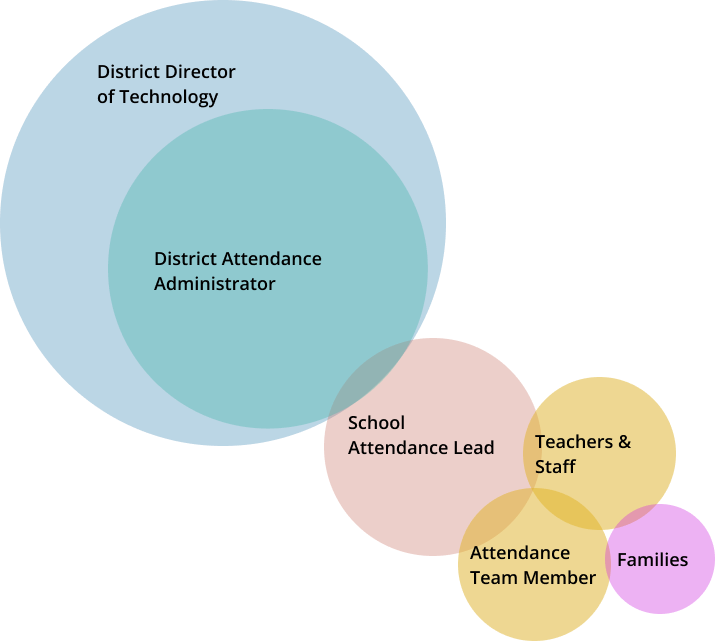
Understanding the ecosystem: this product required designing for a complex multi-stakeholder environment:
District administrators: Decision makers and buyers
School administrators: Responsible for implementation and oversight
Teachers: Daily users tracking attendance and interventions
Students and families: Indirectly impacted by early intervention
Leveraging expertise and customer validation
We approached this 0-1 product with a combination of domain expertise and iterative validation.
Our Director of Product brought deep knowledge from building a similar solution previously. This gave us strong initial hypotheses about district needs and pain points. We validated these hypotheses through ongoing conversations with district administrators and school leaders, sharing prototypes and iterating based on their feedback.

A lightweight MVP
We originally scoped automated workflows, but the engineering estimate exceeded our 3-month timeline. Rescoping to manual turned out to be the better decision: we built a tool that gave humans the right data to make decisions themselves. Districts needed to experience the process before they could define the logic to automate it.
Core hypothesis: Schools need a centralized tool to identify at-risk students early, execute communications at scale, and track interventions over time.
Must-have features for launch:
- Identify at-risk students based on attendance patterns
- Assign interventions to student groups based on severity
- Send bulk messages to families with personalization
- Track student progress and generate reports
What we deferred:
- Automation–customers needed to operationalize before they could automate. Manual-first let us learn what to automate from real usage.
- Advanced UX optimization (prioritized functionality over polish for MVP)
Why this worked:
- Real usage patterns during pilot shaped every iteration priority
- Manual-first was right sequencing for adoption, not just a compromise
The product worked, but practice didn't change
Launched January 2025, 12 schools, 8,100 students. Usage data showed people logging in but not acting. Messages going out via individual DMs instead of bulk tools.
The blockers: fear of bulk messaging, uncertainty about what to say, defaulting to punitive language, completing tasks outside the product due to habit. The challenge shifted from "build the right thing" to "change practice."

Designing for Early Identification & Intervention
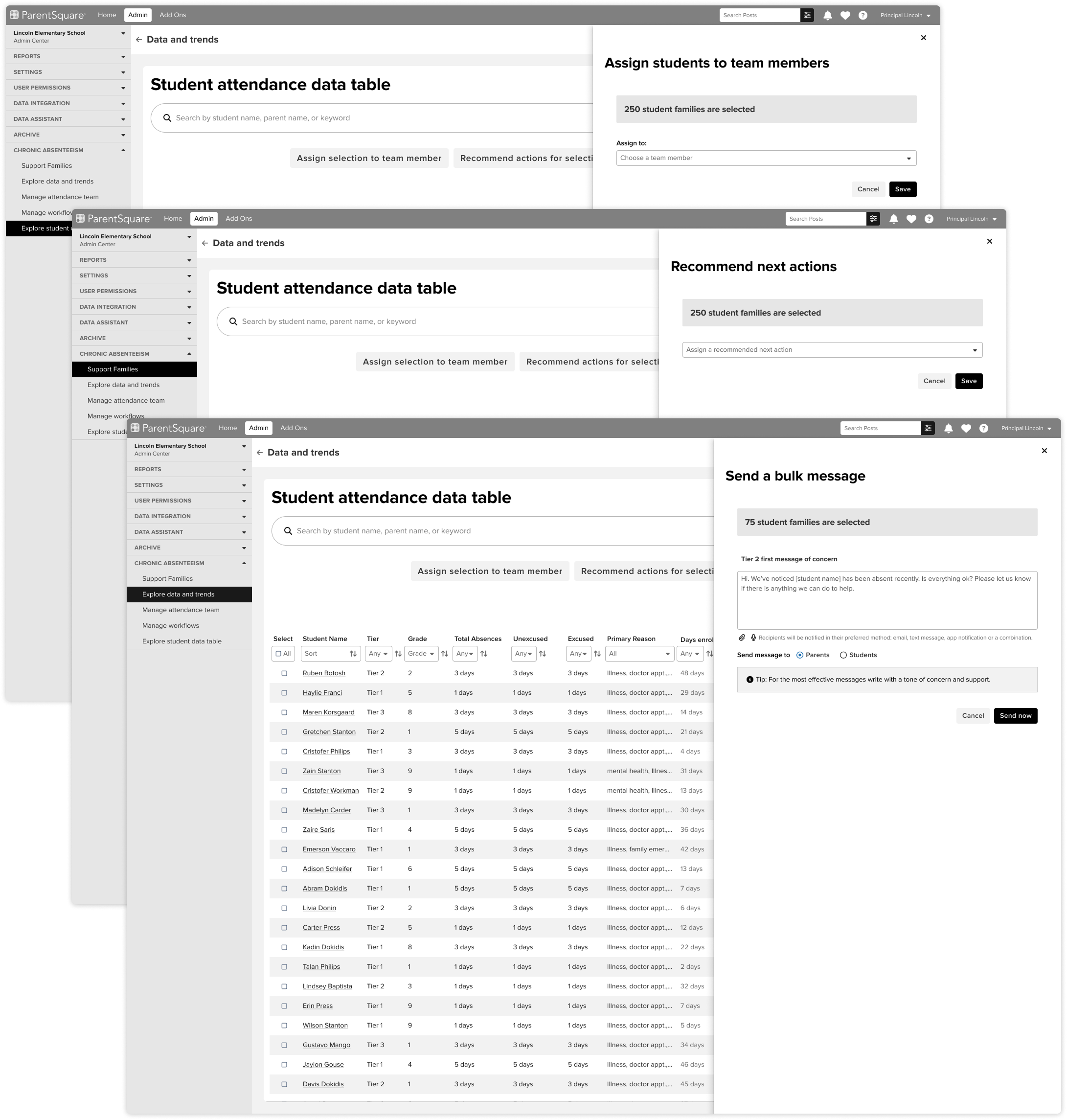
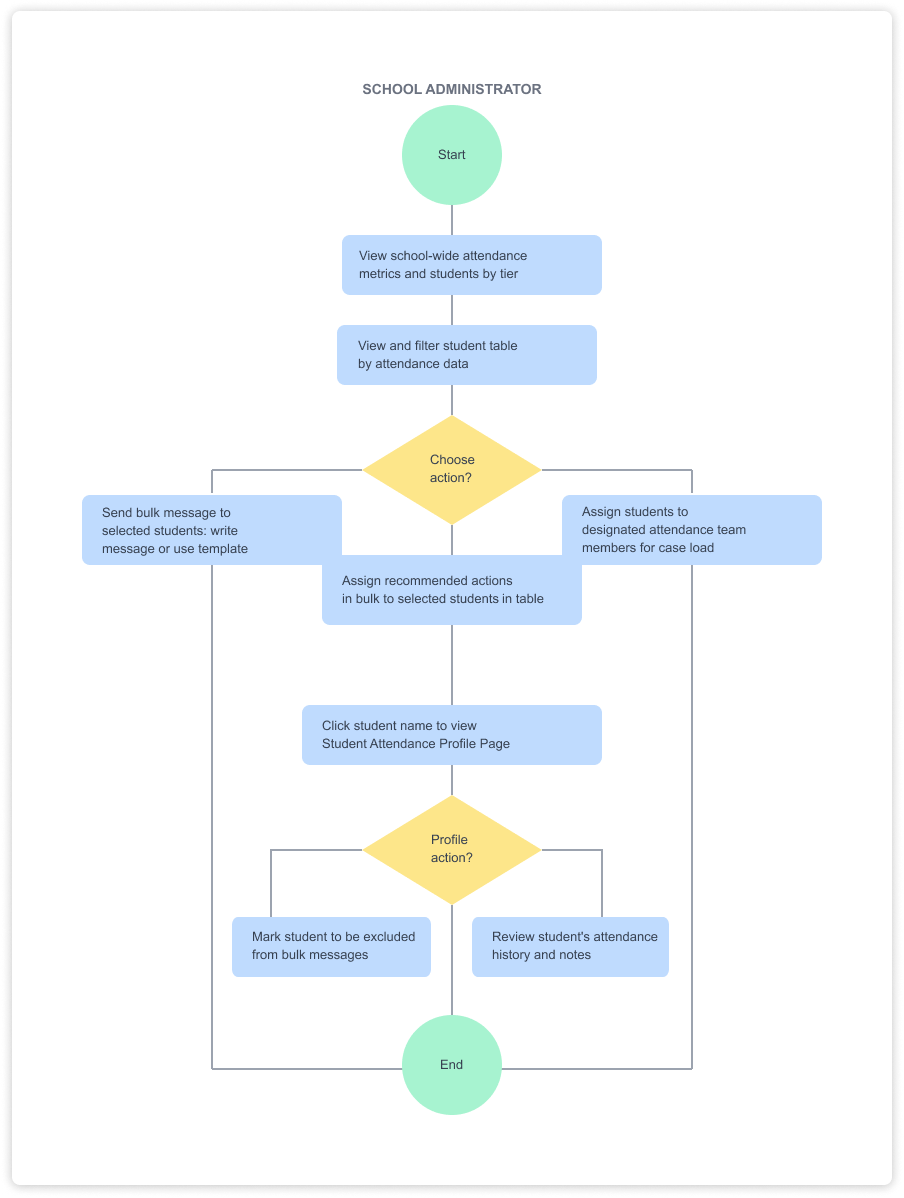
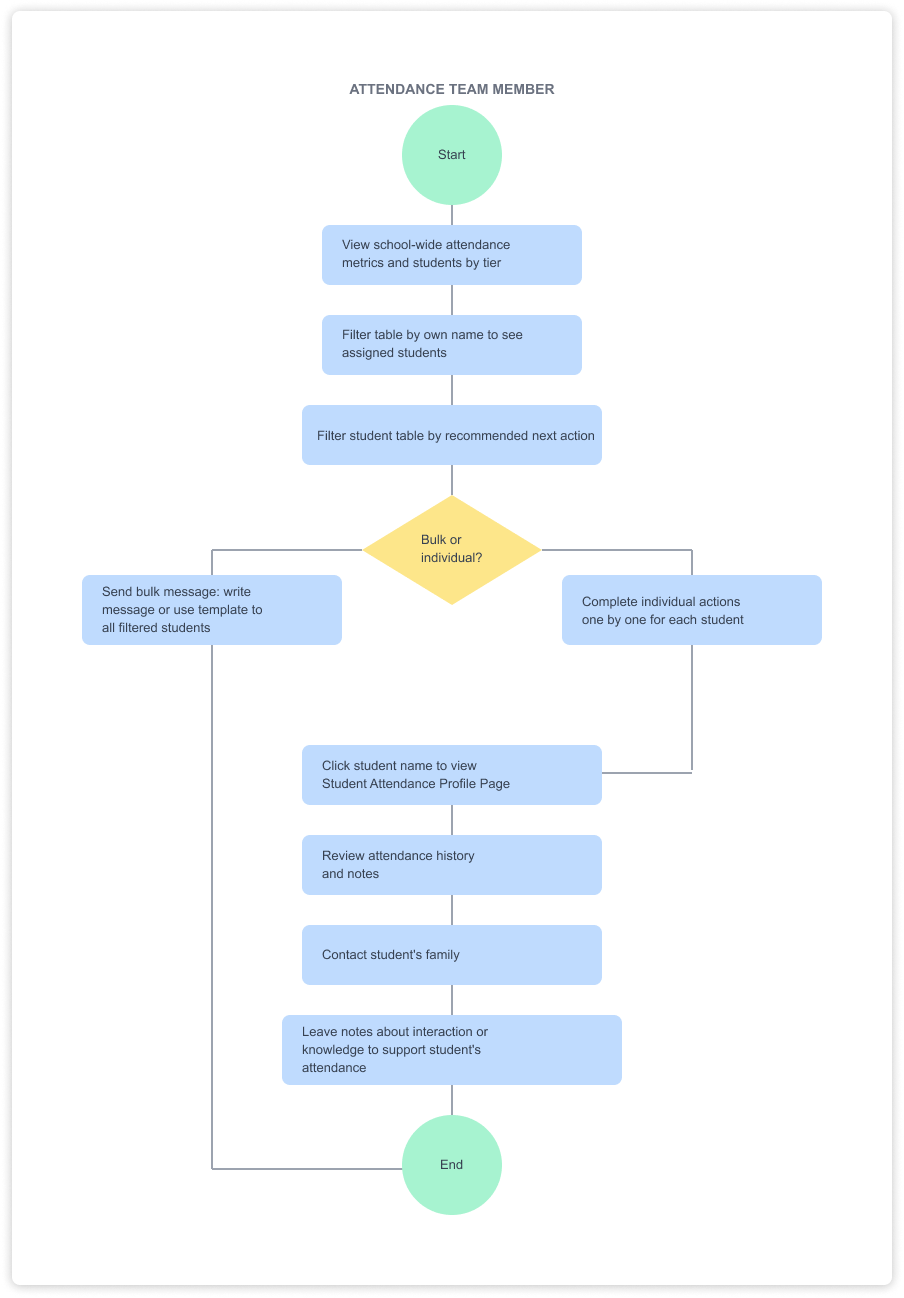
Core functionality: The product centralizes attendance data that was previously scattered across multiple systems, allowing administrators to take action at scale...
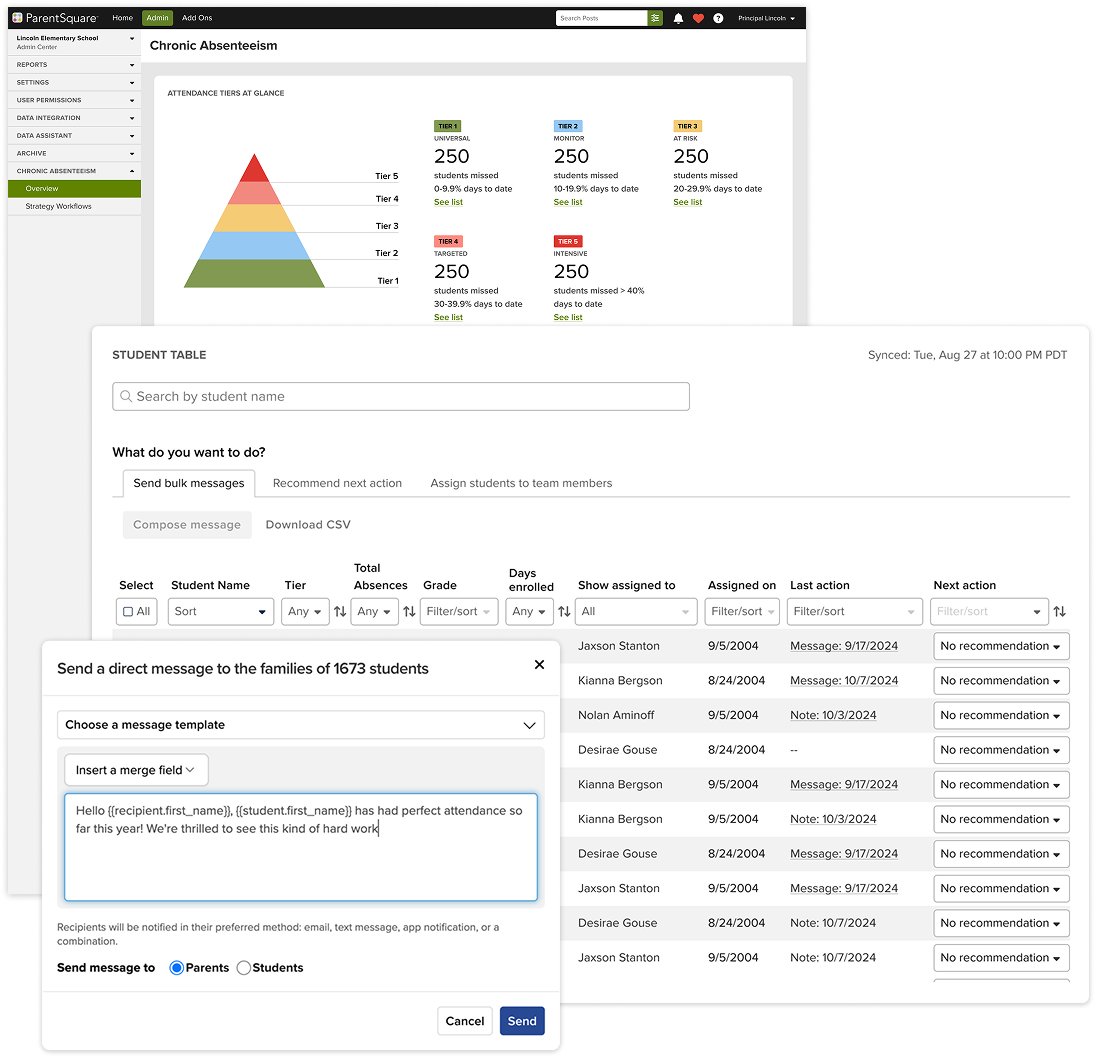
- Centralized data with sorting and filtering: View all student attendance data in one place, with the ability to sort and filter by various criteria to identify groups of at-risk students
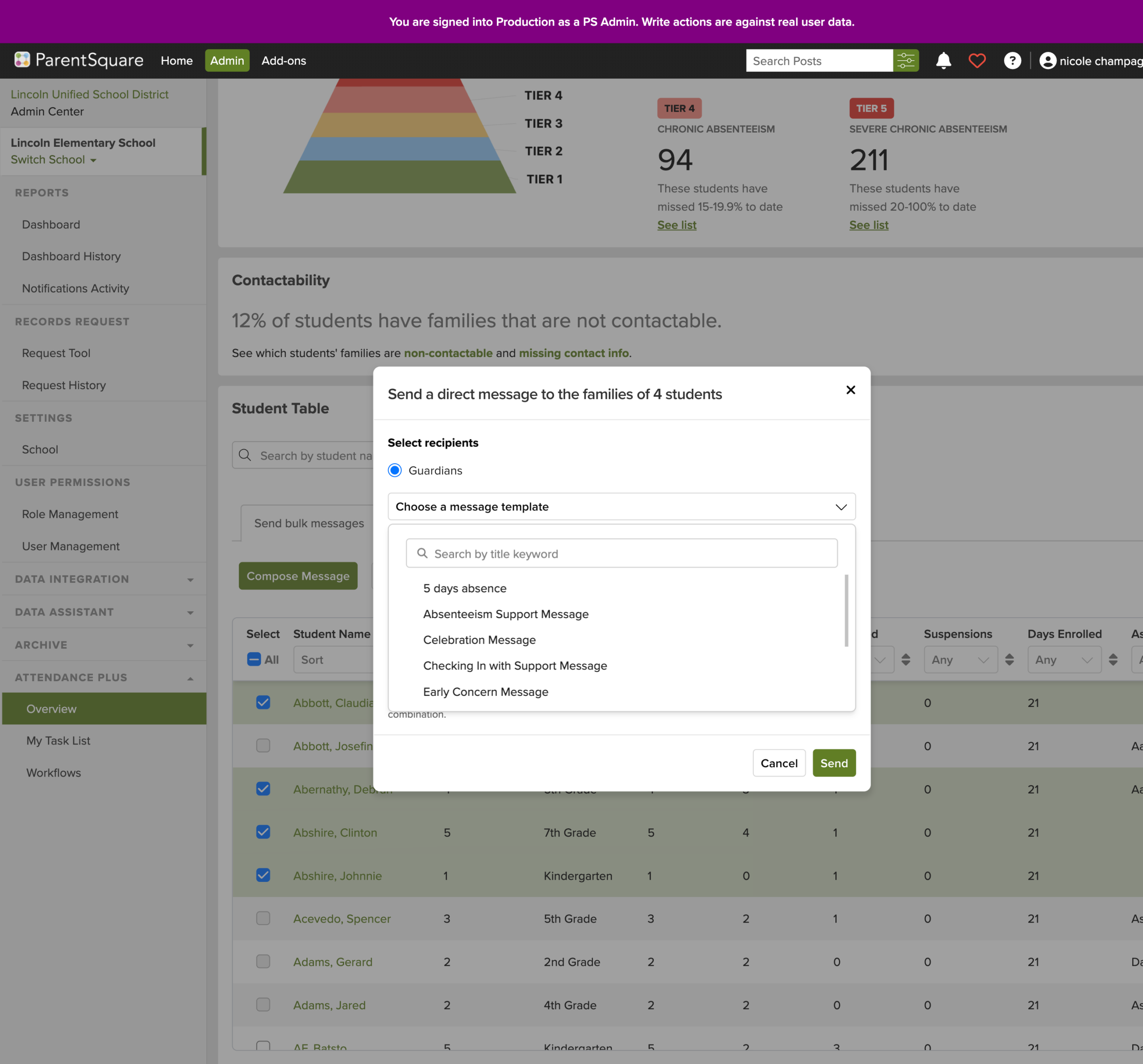
- Bulk family communication: Send personalized bulk messages to families using customizable templates based on student attendance patterns
- Intervention assignment: Assign filtered groups of students to specific interventions and recommend actions like "send message" or "call home"
- Team member assignment: Distribute students to individual Attendance Team Members who can execute interventions
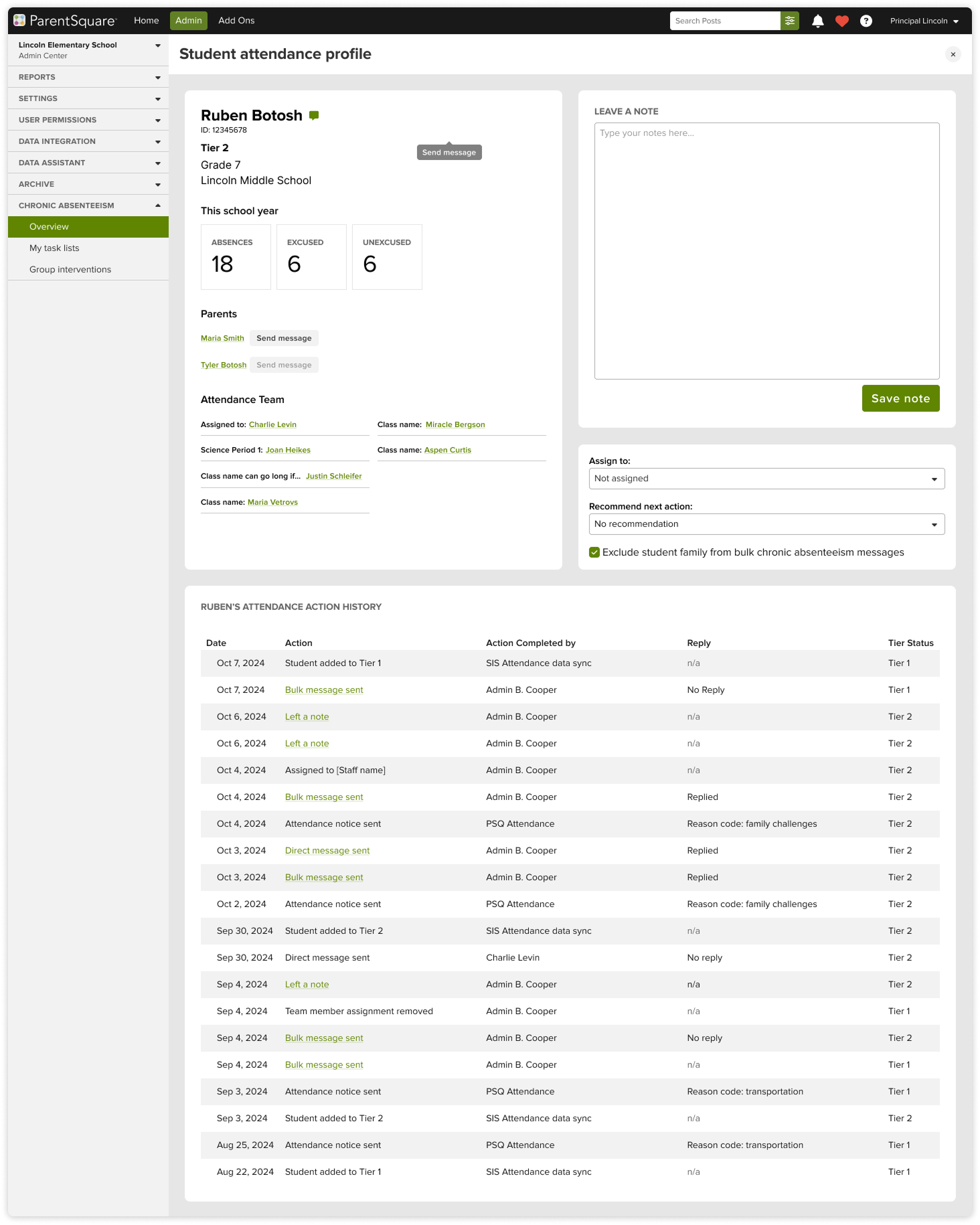
- Student attendance profiles: View individual student history including all previous messages and interventions in one place
The product
Navigating constraints: This product was built under typical startup constraints with legacy challenges: limited engineering resources, tight timeline, and need for rapid market validation. I prioritized functionality and integration over visual polish, focusing on shipping a tool that schools could use immediately.
The attendance dashboard allows administrators to filter students and take actions at scale
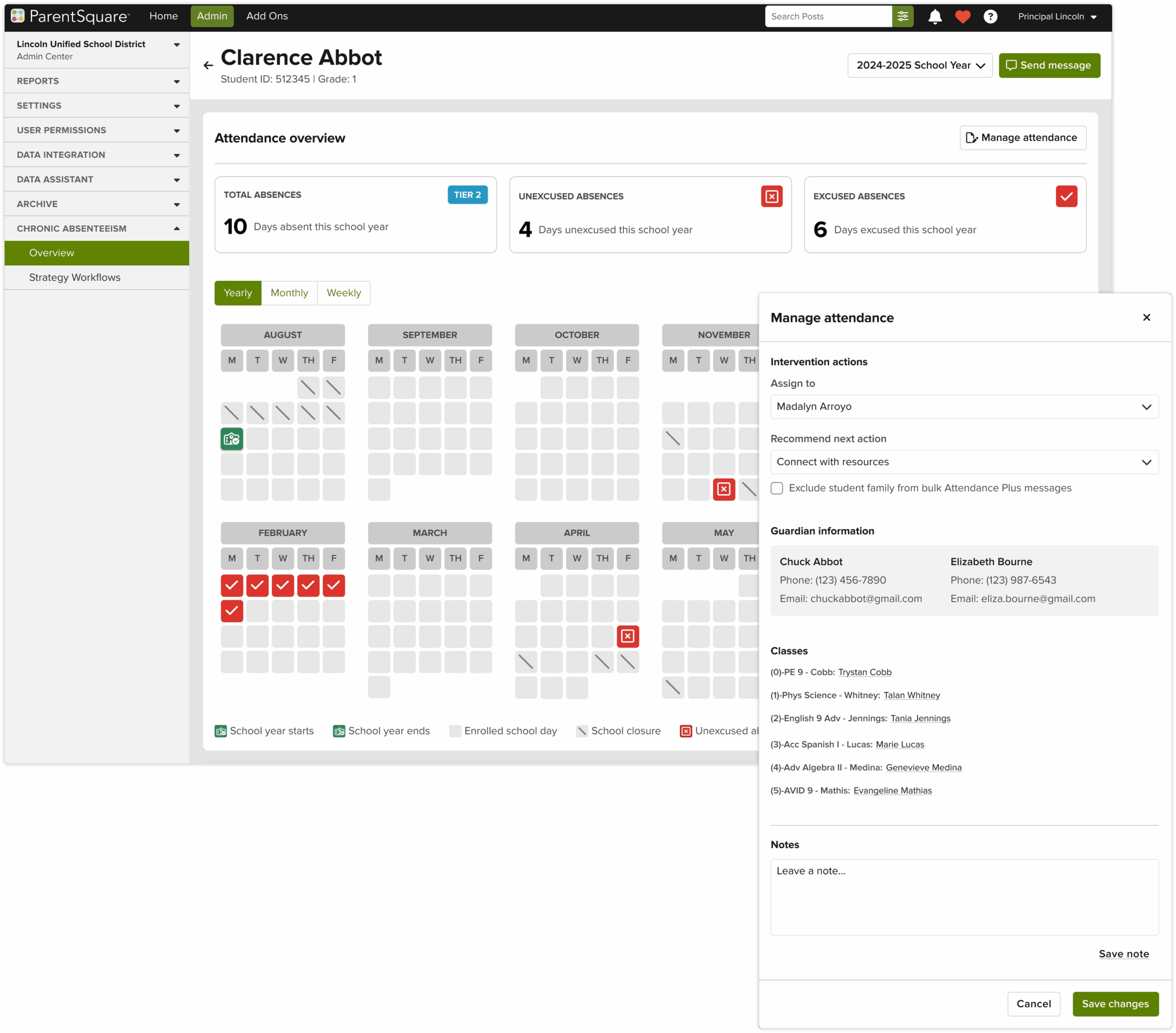
The Student Attendance Profile page allows school staff to see a complete history of a student's interventions and absences, contact information for the student's guardians, and leave notes about interactions or information that can support the student getting back to school.
Leading Continued Development
Adoption barriers weren't about features–they were about behavior. I designed each iteration to target a specific barrier, while directing a junior designer across multiple workstreams.
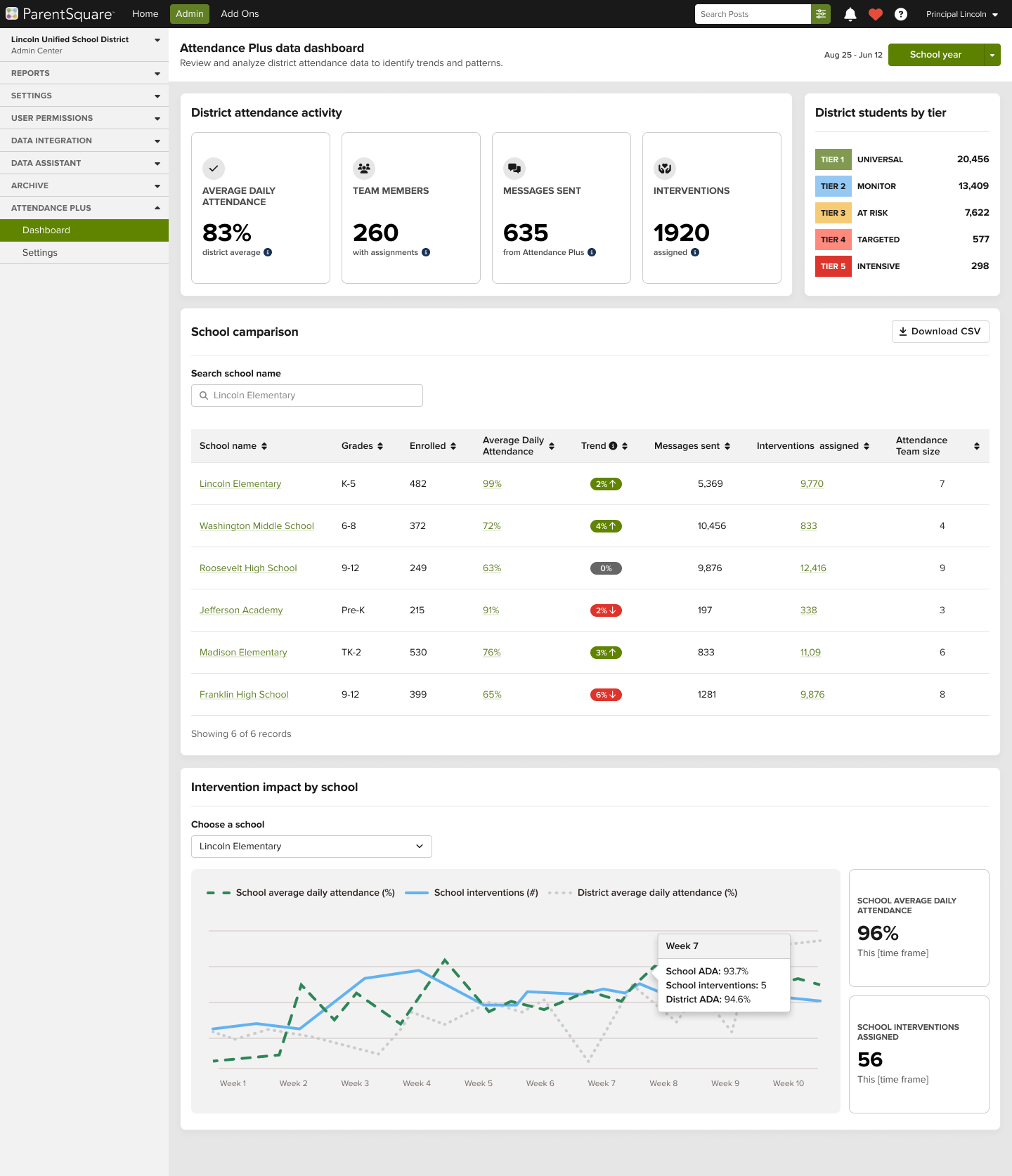
District-level data dashboard
We added a district-level dashboard showing attendance trends and intervention assignments across all schools. This gave district administrators visibility into system-wide patterns and helped them make data-informed decisions about attendance intervention strategy and resource allocation.
Student profile enhancements
Based on pilot feedback, we optimized the student attendance profile page, removing underutilized features and adding a calendar heat map visualization. The heat map allows attendance team members to identify absence patterns at a glance—quickly answering questions like "Is this student missing Mondays? Specific weeks? Random days?"
I led the strategic direction and provided continuous guidance and feedback while the junior designer executed the design work.
Message templates: Embedding culture change
Enabled districts to create and surface their own message templates. The real intent was behavior change: shifting communication from punitive defaults to evidence-based, supportive language. The templates weren't just a feature -- they changed how schools talked to families.
Results
Family Responsiveness
- Severely chronically absent: 3X increase
- One district: 0.5% attendance increase recouping ~$400K in funding in 6 weeks
- Hardest-to-reach families showed the greatest increase
Business Impact
- 250K students
- 1,888 attendance team members active
Award & Recognition
Won Tech & Learning Award of Excellence: Back to School 2025, Secondary Ed
Thinking big and building small to go fast
The "design for the future, build for today" approach proved critical. We dreamed of powerful automation, but discovery showed districts weren't ready for it–they needed to see their process working in one place first. Shipping a lightweight manual MVP was the right call, and the sales validated it.
The hardest-to-reach families showed the greatest increase in responsiveness. Meeting families where they are, giving staff the right data to act earlier, and shifting communication toward support instead of punishment. A lightweight MVP solved so many problems with simple, straightforward features.
Work contributed
- Strategic product vision of 0-1 product development
- System architecture & data modeling
- User research & stakeholder engagement
- Multi-stakeholder system design
- Information architecture
- User experience design
- Cross-functional collaboration
- Design leadership & mentorship
- Feature prioritization & roadmap